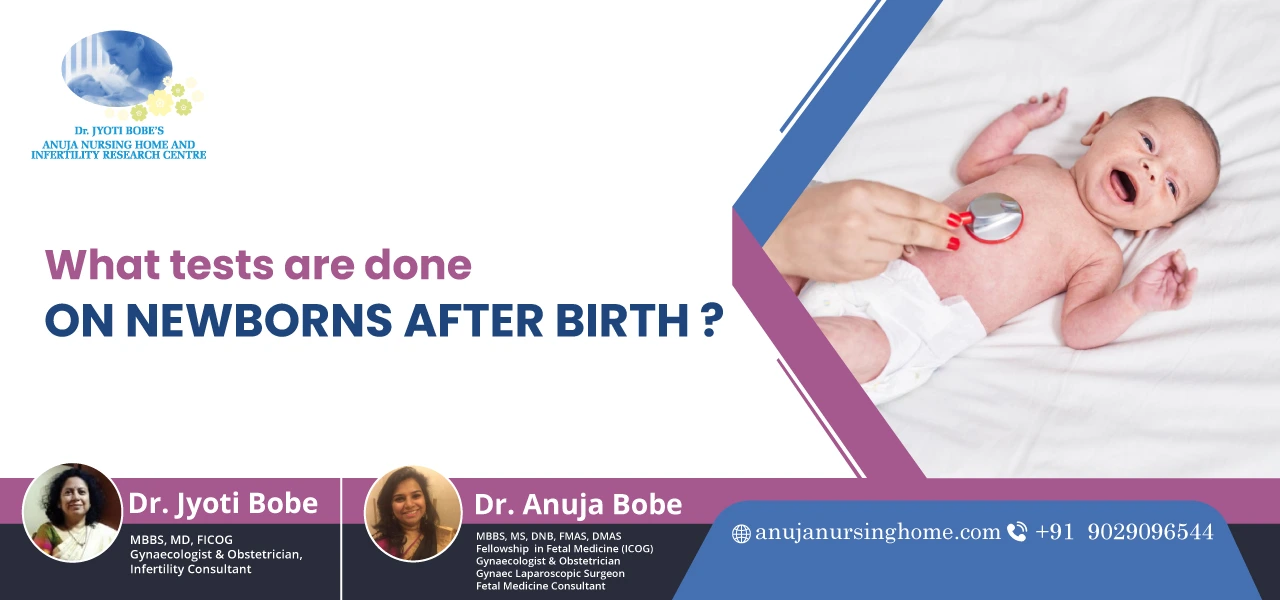
Carrying your little bundle of joy in your arms for the first time is the most beautiful feeling for parents. However, before you take your baby home, there are a few essential newborn tests conducted at a maternity hospital in Airoli to ensure your baby’s well-being. Here’s a list of some common newborn tests.
1. The Apgar Score
Within a minute of your baby’s birth, their vitals are monitored. These are checked again at five minutes, and if needed, in the next 10 minutes. Here’s what it checks:
Appearance: Pink skin color at birth is considered good, as it’s the sign your baby is getting enough oxygen. Your doctor will check the color of your baby’s hands, feet, and body.
Pulse: A good heartbeat means they have good blood circulation.
Grimace: Grimace test is used to check the baby’s reflux. The gynecologist in Airoli will gently pinch the baby to observe their facial reaction. A score of 2 is considered good. Ideally, the baby should cry, cough, or sneeze in response to the stimulation.
Activity: This checks the baby’s muscle tone or how well they flex their arms and legs.
Respiration: Baby’s breathing and crying are assessed right after birth to check if they are able to breathe normally. A score of 0 is assigned if they are not breathing, and 1 if they have a weak cry or irregular breathing, and 2 if they breathe normally and have a strong cry.
The Apgar score between 7 and 10 is considered healthy, while a score between 4 and 6 means your baby requires monitoring. A score below 4 warrants prompt care at a Neonatal Intensive Care Unit.
2. Heel Prick Test
Within 1-3 days of birth, your baby’s blood sample is collected. The sample is checked for rare yet serious genetic, hormonal, or metabolic conditions, which may not be obvious in the baby, but can be difficult to treat later. It’s used to detect conditions like sickle cell anemia, phenylketonuria (PKU), and hypothyroidism. Prompt treatment means better care and a good long-term outcome.
3. Hearing Tests
Your baby’s hearing is checked before they leave the hospital. It’s done through the otoacoustic emissions (OAE) test and the auditory brainstem response (ABR) test. The tests are quick, painless, and often cause no discomfort. OAE measures your baby’s inner ear response to sound, while ABR checks your baby’s brain response.
4. Pulse Oximetry Test
It’s another important screening test that detects congenital heart defects in babies. A simple band is placed on their hands or feet to measure the oxygen levels in their blood. If the oxygen is lower, further testing, such as an echocardiogram, may be needed to diagnose the underlying heart issues.
5. Bilirubin Screening
Many babies have mild jaundice when they are born. Most jaundice cases are mild and resolve on their own. Some, however, may require phototherapy, especially if the bilirubin level spikes. The symptoms include yellowing of the whites of the eyes and skin. A simple blood test can detect bilirubin levels.
These tests are used to detect health issues in newborns, which, if left untreated, can cause problems later on. These issues aren’t obvious in children, which is why screening is often recommended.