Your period is a structured cycle. Every month, before your uterine lining sheds the tissue and blood through the cervix, a lot goes on in your reproductive system. Basically, your body prepares for pregnancy, and when fertilization doesn’t occur, the period starts.
Understanding ovulation and your fertility window can significantly help someone who’s been trying for months to conceive. You must visit a gynecologist in Airoli if you suspect fertility issues. In the meantime, this post will walk you through tips for planning for pregnancy after your period.
Menstrual Cycle Explained
Typically, a menstrual cycle lasts 28 days. For some women, it is shorter, i.e., 21 days, and for others, it’s 35 days long. Both are normal, as long as your cycle is consistent. Let’s understand different phases of your menstrual cycle:
- Period: Your cycle begins on the first day of your period. That’s when your uterus sheds the lining that had been built to prepare your womb for implantation. During this time, the estrogen and progesterone levels drop.
- Follicular Phase: Your body releases Follicle-Stimulating Hormone (FSH), which triggers ovarian follicle maturation. One of these follicles becomes dominant later in your cycle. The follicular period starts at the beginning of your menstrual cycle and lasts 10-14 days.
- Ovulation: This is the most crucial stage of your menstrual cycle. Ovulation is when the mature egg from one of the ovaries is released into the fallopian tube, which typically happens on day 14th of your period. The egg stays for 12-24 hours, making it the most fertile period of your cycle. Pregnancy occurs if the sperm fuses with an egg during ovulation.
- Luteal Phase: This is when your body starts preparing for implantation by producing progesterone. It helps build the uterine lining to ensure smooth implantation. If fertilization doesn’t occur, the uterine lining sheds, and the new cycle restarts.
What’s the Best Time to Conceive?
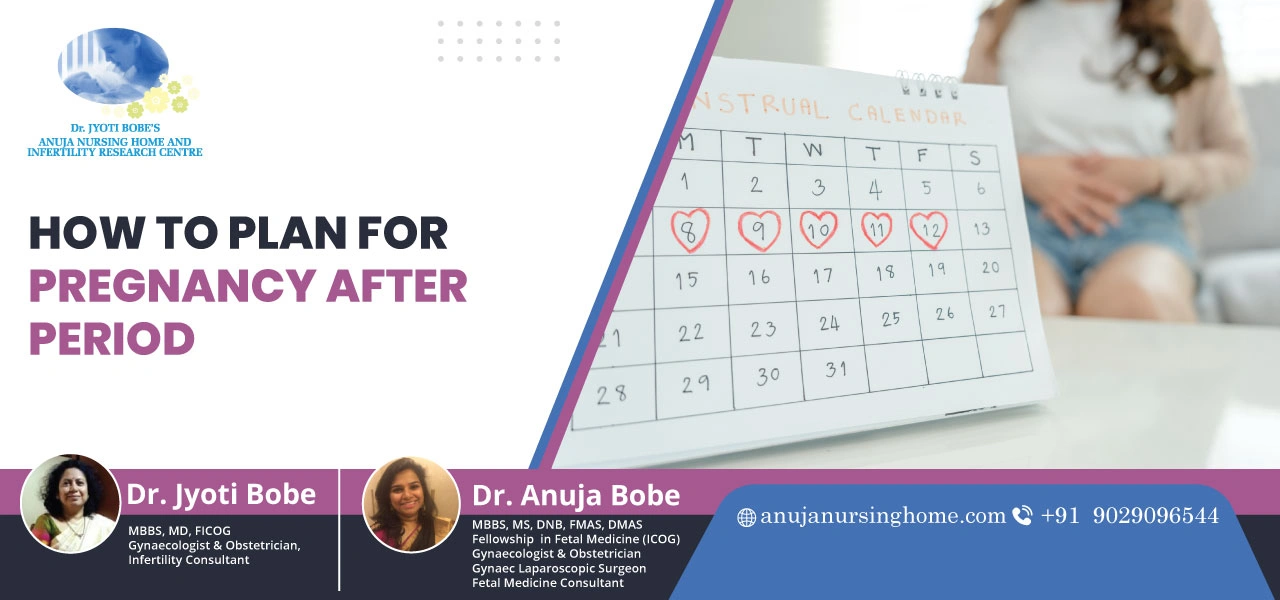
This leads us to the question: how to time intercourse so you have the best possible chance of conceiving? It depends mainly on the length of your cycle. The fertile window is 5 days before ovulation or the day of ovulation.
Sperm can live up to 3-5 days in your reproductive system and can fertilize an egg at any time during this period. So, if you have intercourse before ovulation, you can still get pregnant. This means days 9-14 of your cycle are your fertile window if you have a 28-day menstrual cycle. So, you should try 3-4 days after your period ends (if it ends in 5 days).
When to See a Doctor
Most healthy couples conceive within a few months (6-12) of trying, but pregnancy depends on many factors other than timing intercourse. Your age, health, and medical history all play a part in ensuring a smooth pregnancy. It’s best to seek medical care if your period is absent or irregular, you have hormonal disorders, or you have been trying to get pregnant for more than 12 months. Antenatal care in Airoli is equally important after conception. It helps ensure a safe pregnancy.