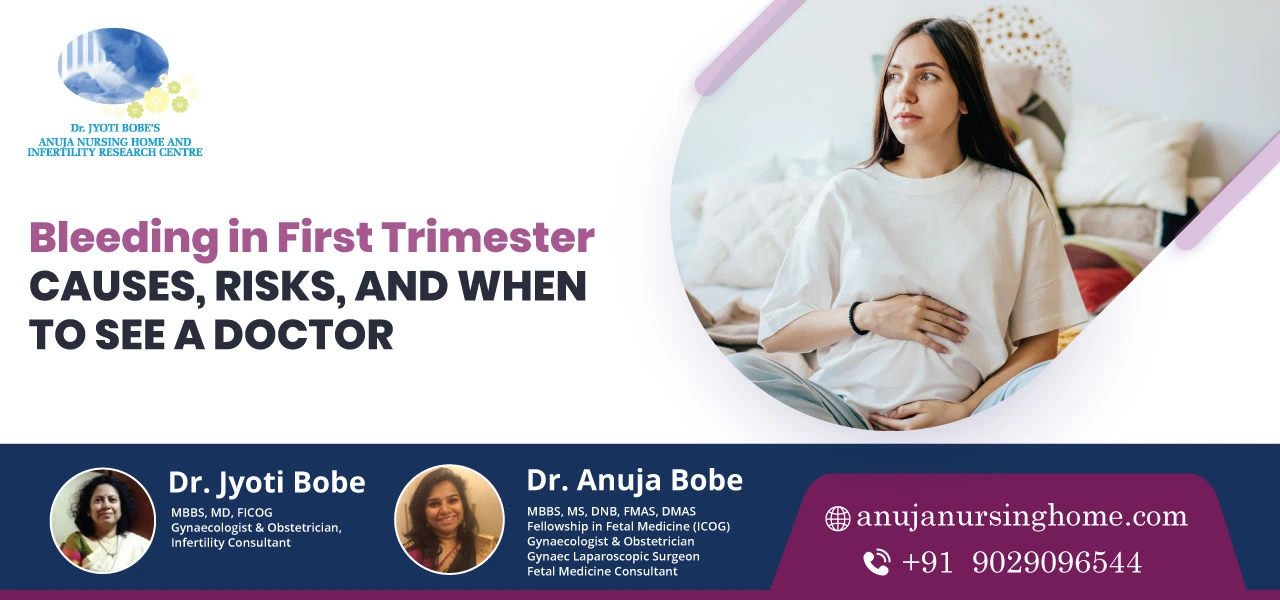
Vaginal bleeding or spotting in the first trimester (the first three months of pregnancy) is quite common. In many cases, spotting in the first trimester doesn’t indicate a serious concern. In fact, 20-30% of women experience bleeding in early pregnancy and go on to have a healthy pregnancy and delivery.
That said, vaginal bleeding during pregnancy can also indicate a serious issue, such as a possible miscarriage. In this post, we’ve cleared all your doubts regarding bleeding in the first trimester, causes, risks, and what requires a visit to the maternity hospital in Airoli.
What Causes Bleeding During the First Trimester?
First-trimester bleeding occurs between weeks 1 and 12. It can range from mild spotting to heavy bleeding, such as bleeding during periods. It can be painless or accompanied by severe menstrual cramps. Colors can range from red and pink to brown.
1. Implantation Bleeding
The most common cause is implantation bleeding, which occurs when the fertilized egg attaches itself to the uterine lining. This leads to mild spotting, which can be pink or brown in color, and lasts for a few hours to a couple of days. Implantation bleeding is common and safe.
2. Hormonal Shifts
Changes in your hormonal balance can make your cervix sensitive, causing bleeding after intercourse or a vaginal exam. This is also harmless, as long as the bleeding doesn’t occur with a foul-smelling discharge, pain, or burning sensation in the vagina, or itching. This indicates a cervical infection, which requires immediate medical attention.
3. Miscarriage
Bleeding can sometimes be a sign of miscarriage, especially if you experience heavy bleeding with visible blood clots or tissues. See a gynecologist in Airoli immediately if there’s severe bleeding with abdominal cramps. Miscarriage in the first trimester is usually caused by chromosomal abnormalities.
4. Ectopic Pregnancy
Bleeding can also be a sign of ectopic pregnancy, another medical emergency, in which the embryo that should attach to the uterine lining starts developing elsewhere, usually in the fallopian tubes. It’s considered a medical emergency, as the fallopian tubes can burst, causing severe bleeding.
5. Molar Pregnancy
Heavy bleeding in the first trimester can also indicate a molar pregnancy, although it’s extremely rare. It happens when, instead of the normal embryo, an abnormal tissue grows inside the uterus. This may look like a cluster of cysts on an ultrasound. Such pregnancies need to be terminated as soon as possible.
Risks of Bleeding during First Trimester
Bleeding during the first trimester can be normal or abnormal, depending on the cause, severity, and accompanying symptoms. Any bleeding that’s heavy or occurs with intense abdominal pain should be evaluated by a healthcare professional, as it can be a sign of a miscarriage.
Light spotting in the first few weeks can be absolutely normal, especially if it’s without any other symptoms or resolves shortly.
Conclusion
Bleeding early in pregnancy can seem alarming, but it doesn’t always mean a miscarriage or other pregnancy complications. It’s best to stay aware of the warning signs and seek medical care if you experience severe abdominal cramps, heavy bleeding, dizziness, shoulder pain, nausea, and other unusual symptoms.