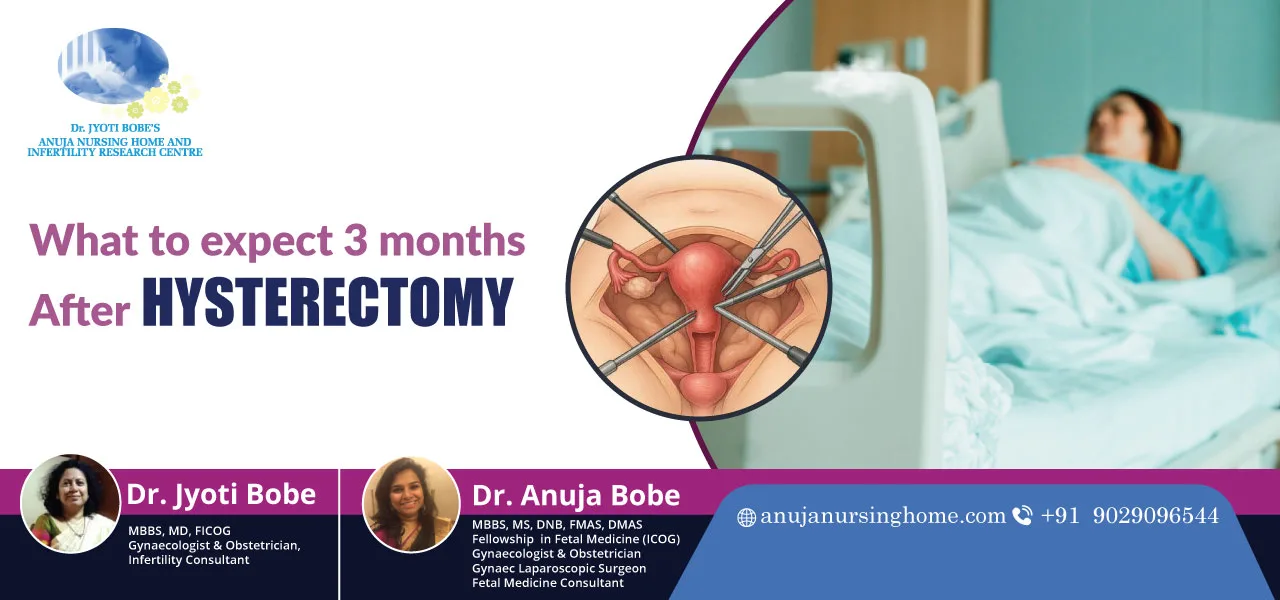
Most women can resume regular physical activities three months after a hysterectomy, but certain heavy physical tasks and weight lifting may still be limited. You can resume sex, light exercises, and household or office work if your doctor gives you a go-ahead.
Getting past the three-month mark after a hysterectomy feels like a big milestone in your recovery journey. You may have noticed many changes in your body during this period. You may have also returned to many routine activities, while some heavy physical tasks might still be restricted. Hysterectomy is a major surgery. A gynecologist in Airoli provides detailed instructions on what you must do and avoid during your recovery journey. Knowing what to expect three months after the procedure is quite reassuring.
3 Months After Hysterectomy: Major Changes
A hysterectomy may sometimes involve the removal of the ovaries (oophorectomy) or the fallopian tubes (salpingectomy). Here’s what you can expect three months after a hysterectomy.
1. Pain is Relieved
The sharp, significant pain that you may have felt initially after a hysterectomy must be gone. That said, mild pelvic discomfort can still be present and is more common after heavy physical activities. Some women report mild lower back ache with a pulling sensation on the incision site. Severe, persistent, or worsening pain is not normal at this point.
2. Increased Energy, Low Fatigue
Your body may shift from feeling too energetic and highly productive on some days to feeling a little exhausted on other days. That’s completely normal. But most experience energy levels that are back to pre-surgery days. Tasks that initially (after surgery) seemed heavier, such as walking, cooking, and light household chores, will now be easily manageable. Many even resume work.
3. Emotional Changes
Hysterectomy surgery in Airoli doesn’t only cause physical changes, but also has emotional effects. You just had a vital reproductive organ removed, so emotional changes are inevitable. Some women feel super relaxed, especially if they have had the surgery to treat heavy bleeding, chronic pelvic pain, fibroids, or severe gynecological issues that negatively affected their quality of life.
Others, especially those who underwent oophorectomy, may have more pronounced emotional changes. Surgical removal of the ovaries can lead to an instant onset of menopause, which can cause many symptoms. This includes mood swings, hot flashes, difficulty sleeping, irritability, and anxiety.
4. Sexual Health
By three months, gynecologists usually clear most women for sexual intercourse. However, for some women, intimacy may feel a little different from earlier. In the first few months after a hysterectomy, you may notice dryness around the vagina, which causes mild discomfort during intercourse. Some also notice reduced sensation. Resume sexual activity when your body feels ready. Do it when you are comfortable rather than rushing for it.
5. Physical Activity
You may have already been doing physical activities by this point. Walking, stretching, and light exercises are not just okay, but highly recommended. That said, you must still steer clear of heavy workouts, heavy lifting, and intense exercises that can strain your pelvic floor muscles.
Many of the post-surgical changes appear shortly after surgery. Mild bleeding, pain at the incision site, bloating, and pelvic discomfort are mostly felt within the first few weeks. Later, it gets better, as your body adapts to the changes.