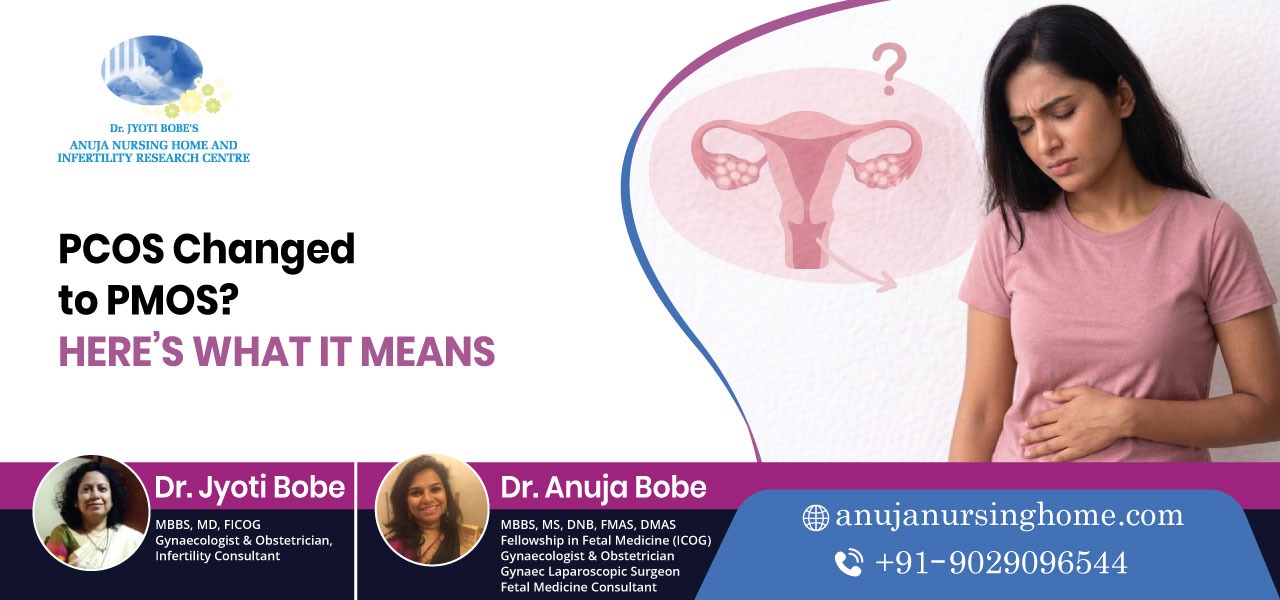
You may have heard the term PCOS (Polycystic Ovarian Syndrome) from a gynecologist in Navi Mumbai. Recently, it’s been renamed as Polyendocrine Metabolic Ovarian Syndrome (PMOS). The biggest driver of this shift is the fact that many women with PCOS do not have ovarian cysts.
Besides, the condition doesn’t just affect your ovaries but also your hormonal health, metabolism, weight, skin, and even mental health. Note that only the name and how we understand PCOS have changed, not the condition itself. Let’s learn more about it.
Understanding PMOS
PMOS is a hormonal condition that occurs when a group of male hormones, androgens, is secreted in large amounts in a female’s body. Too much androgen can lead to excessive hair growth on the face and body, thinning hair on the scalp, and acne.
Additionally, the condition is linked to insulin resistance, where your cells are unable to use insulin properly, increasing your risk of developing type 2 diabetes.
Some women with PMOS also develop ovarian cysts—small fluid-filled sacs that contain immature eggs or follicles. Unlike normal eggs, which mature and release once every month during your ovulatory cycle, these immature eggs do not complete the maturation cycle. These follicles then appear as several small sacs on the ovaries in an ultrasound.
As mentioned previously, there was an ongoing debate regarding how PCOS is a broad, endocrine, and metabolic disorder rather than only a gynecological one. This led to the decision to give it a new name that better reflects its influence on your health.
Common PMOS Signs
For years, women have ignored PMOS symptoms, assuming they are a normal part of their menses and will resolve on their own with time. With more awareness around a woman’s reproductive health, women have been paying greater attention to these symptoms:
- Irregular or missed periods
- Excessive weight gain or difficulty losing weight
- Acne
- Facial hair growth
- Hair fall
- Fatigue
- Mood swings
- Infertility
PMOS or PCOS treatment in Navi Mumbai is quite effective for women struggling with the above symptoms. Whether you want to regulate your menstrual cycles or conceive naturally, a gynecologist can help plan a personalized treatment for you.
Best PMOS Treatment
There’s no specific treatment for PMOS that works for all. Your gynecologist will determine an appropriate treatment based on your symptoms, pregnancy goals, and existing health issues. Here’s what helps:
1. Lifestyle Factors
Staying active can help manage your blood sugar levels, while a low-calorie and nutrient-dense diet can keep your weight in check. Simple lifestyle changes, such as losing weight, can relieve your symptoms.
2. Medication
Birth control pills that contain estrogen and progestin may be advised to balance androgen levels in your body, which can make your menstrual cycles more predictable. They also help with facial hair, acne, heavy bleeding, and other PMOS symptoms.
Metformin—a medicine that improves insulin function—can be used in conjunction with Letrozole (to stimulate ovulation) to improve your chances of conception. Clomiphene and Gonadotropins are other fertility drugs recommended for women who can’t get pregnant due to PMOS.