
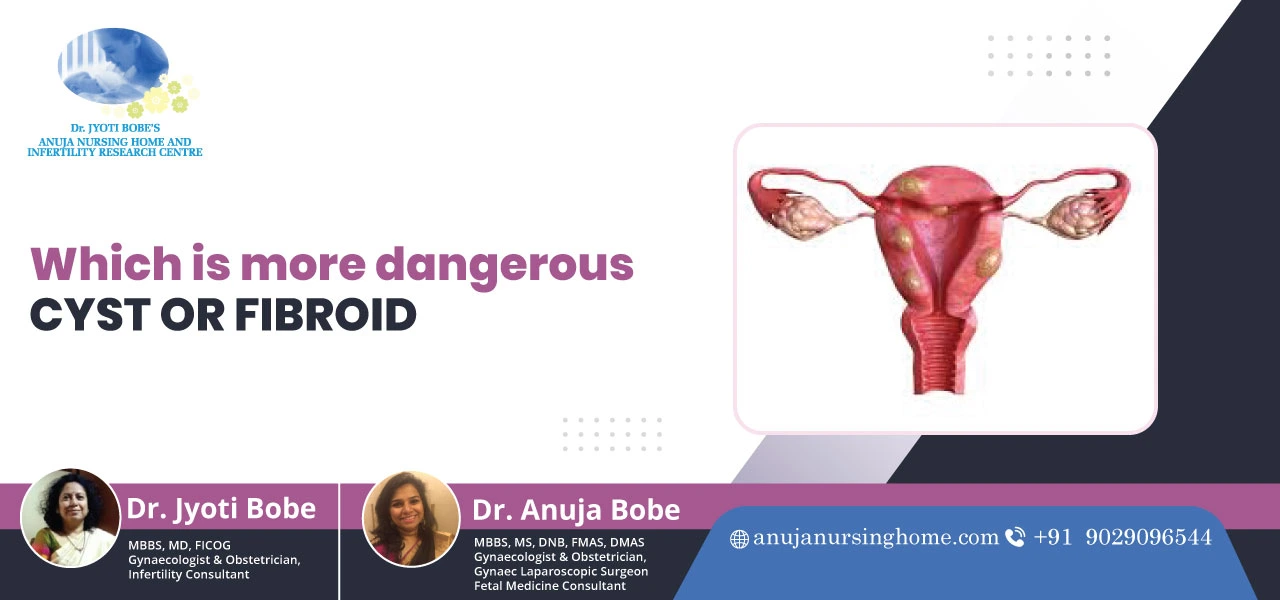
Many women overlook heavy bleeding during periods, spotting between periods, and severe menstrual cramps. They believe it’s a normal part of their reproductive health. However, these symptoms can point to underlying reproductive issues that require proper monitoring and treatment.
Two such issues that are common in women of childbearing age are cysts and fibroids. While they may sound similar and often produce quite similar symptoms, they have noticeable differences. The question is, which is more dangerous: a cyst or a fibroid? Let’s look at it from the perspective of a gynecologist in Airoli.
What is a Fibroid?
A fibroid grows in or on the uterus. It can be intramural, submucosal, subserosal, or pedunculated. It’s a non-cancerous growth that may or may not produce symptoms. These are made of fibrous and muscle tissues and can grow in size.
You can have one or multiple fibroids of sizes ranging from a tiny grain to a tennis ball or even a watermelon. Fibroids are common, particularly in women in their 30s and 40s. While they don’t go away on their own, they may not need treatment as long as they don’t cause any significant discomfort.
What is a Cyst?
A cyst, unlike a uterine fibroid, is a fluid-filled pouch on or in the ovaries. Almost every woman develops at least one ovarian cyst in their lifetime without knowing. In fact, most functional cysts do not cause symptoms and often resolve without requiring treatment. A cyst can be dermoid, functional, endometrioma, or cystadenoma. A cyst is rarely dangerous. However, it can turn into a malignant tumor if it develops after menopause.
Key Differences Between Fibroid and Cyst
Fibroid Vs Cyst: Symptoms
Fibroids and cyst can be asymptomatic. If symptoms appear, you will notice these:
Fibroid
- Abdominal cramps
- Frequent urination
- Heavy and prolonged periods
- Bloating
- Pelvic pain
Cyst
- A dull or throbbing pain on one side of the pelvis
- Bloating
- Breast tenderness
- Pain during intercourse
- Heavy bleeding
- Weight gain
Fibroid Vs Cyst: Causes
Here’s what causes fibroids and cysts:
Fibroids
The exact cause of fibroids is not known, but experts believe that genetics, a certain lifestyle, and your family history of fibroids can contribute to a heightened risk. It mostly develops after age 30, and the risk remains until menopause.
Cyst
Cysts can occur due to endometriosis, polycystic ovarian syndrome, pregnancy, and hormonal issues. Pelvic infections are also linked to an increased risk of ovarian cysts.
Fibroid Vs Cyst: Treatment
Both require treatment only when they are symptomatic. Here’s what the treatment includes:
Fibroid
- Regular monitoring through ultrasounds to check if they remain the same or are growing
- Contraceptives
- Uterine fibroid embolization
- Surgical removal of the fibroids or uterus
Cysts
- Hormonal contraceptives
- A surgical removal of the cyst (if it’s large enough to cause symptoms)
- Surgical removal of the ovaries
Visit the nearest gynecological surgery hospital in Airoli to discuss your symptoms and treatment with a healthcare provider. They will run tests to detect the size of fibroids or cysts. Based on your reports, they will decide whether treatment is needed.