Once your pregnancy is confirmed, your gynecologist in Airoli will run glucose tests, CBC, urinalysis, and other routine tests, which are part of the pregnancy care program. Some couples opt for genetic tests, which are optional but highly recommended for those with a family history of genetic diseases.
If you are above 35 or have certain genetic disorders that run in your or your partner’s family, you may want to take these prenatal genetic tests to rule out genetic diseases in your baby. Let’s learn more about genetic testing, when it’s needed, and what it detects.
What is Prenatal Genetic Testing?
In a healthy human, there are 23 pairs of chromosomes. Twenty-two pairs look similar, and the remaining one is the sex chromosome, which decides the baby’s sex.
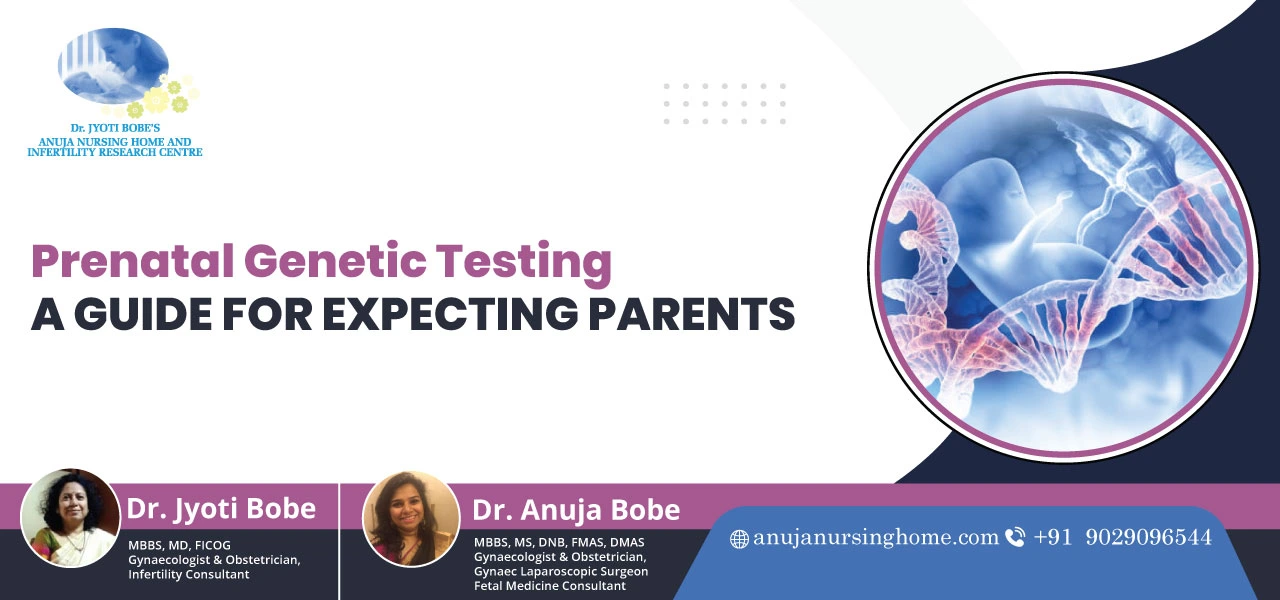
If the baby has an extra copy of a chromosome, they might be at an increased risk of certain health and developmental issues. Prenatal genetic testing includes tests that can help detect chromosomal abnormalities in a fetus.
Who Needs Prenatal Genetic Testing
Many genetic screening tests are part of prenatal care in Airoli. For example, nuchal translucency, quad screen, and fetal anatomy scan are advised for all women, irrespective of their age, health, and other factors. Diagnostic genetic testing is optional. It’s not included in your routine pregnancy screening tests, but is advised for women:
- Above 35 years
- Have had a miscarriage or stillbirth
- Have a family history of genetic disorders
- Have abnormal screening test results
Types of Prenatal Screening Tests
Screening
If the prenatal genetic screening test results are abnormal, it means your baby is at an increased risk of certain genetic diseases. The test determines whether additional testing is needed. The first genetic screening test is done in your first trimester. You need to take a blood test and an ultrasound to detect Down syndrome and Edward syndrome.
You also need to take a non-invasive prenatal test around 10 weeks of gestation. It checks your baby’s DNA to calculate the risk of Down syndrome, trisomy 18, and trisomy 13. In the second trimester, a quad screening is conducted to assess your baby’s risk of having a genetic disorder or neural tube defects.
When you are 18-20 weeks pregnant, a fetal anatomy scan is scheduled. It’s an ultrasound test that reveals detailed images of the baby’s organs, including the heart, kidneys, abdomen, legs, arms, and more. The test detects abnormalities in the fetus’s development.
Diagnostic Tests
These tests can be used to confirm genetic or chromosomal defects in a fetus. A diagnostic test gives a more detailed look at the baby’s DNA. A gynecologist collects a sample of the placental tissue and a small amount of amniotic fluid, which is sent to the lab for analysis. The test is recommended when the results of your screening test show “high-risk.”
Prenatal screening tests provide peace of mind. Although some tests are optional, your gynecologist might recommend them to ensure your baby is achieving all growth milestones in your womb.